You Won't Believe What We Found Driving Through Salalah's Hidden Valleys
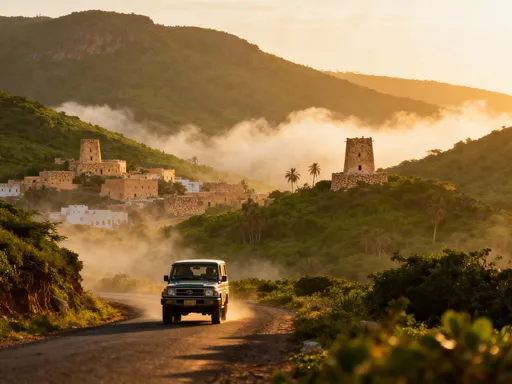
Driving through Salalah, Oman, I discovered a world where ancient stone towers rise from desert wadis and coral-block villages cling to misty highlands. The freedom of self-driving unlocked remote architectural gems most tourists never see. From abandoned frankincense-era forts to living mud-brick communities, every turn revealed structures shaped by monsoon winds and centuries of trade. This isn’t just a road trip—it’s a journey into Oman’s soul.
Why Salalah? Beyond the Summer Mist
Salalah, the capital of Oman’s Dhofar region, is a destination transformed by seasonal magic. Each year between June and September, the Khareef monsoon sweeps in from the Indian Ocean, cloaking this normally arid landscape in a lush, emerald embrace. Hillsides bloom with wildflowers, waterfalls cascade down rocky cliffs, and mist rolls through valleys like breath across a mirror. It is during this brief green season that Salalah reveals its most enchanting face—one that draws visitors from across the Gulf seeking relief from the desert heat and a taste of something uniquely Omani.
Yet beyond the well-trodden paths of Al Mughsail Beach and the Sultan Qaboos Grand Mosque lies a quieter, more profound side of Salalah. One that unfolds not in resort lounges but in the silence of highland villages and the echo of footsteps through abandoned towers. This hidden dimension is best accessed not by tour bus or guided caravan, but by the open road. Self-driving through Salalah offers an unmatched level of autonomy, allowing travelers to pause at a crumbling watchtower, linger in a fog-draped canyon, or follow a dirt trail to a village untouched by mass tourism.
The region’s historical significance adds depth to its natural beauty. For centuries, Salalah was a pivotal node in the ancient frankincense trade, a network that stretched from southern Arabia to Egypt, Greece, and beyond. Frankincense, harvested from the resin of Boswellia trees native to the Dhofar mountains, was so valuable it was considered worth its weight in gold. Caravans passed through these valleys, guarded by watchtowers and sustained by hidden water channels. The architecture that remains today—stone towers, fortified villages, and wind-swept forts—stands as a testament to this era of cultural exchange, linking Oman not only with the Arabian Peninsula but also with East Africa and the Indian subcontinent.
Modern visitors can still trace the outlines of this legacy. Place names echo Swahili and Persian roots, and local cuisine bears the imprint of centuries of maritime trade. But to truly understand Salalah’s layered identity, one must move beyond the city limits, where the past is not preserved behind glass but lives in the walls of homes still occupied, in irrigation systems still functioning, and in the quiet dignity of communities that have adapted to their environment for generations.
The Magic of the Empty Road: Self-Driving as a Gateway to Authentic Discovery
There is a particular kind of freedom that comes with driving through Oman’s southern highlands—an unscripted liberty that transforms a vacation into an exploration. Renting a 4x4 in Salalah is not just a convenience; it is the key to unlocking landscapes that remain off-grid and uncurated. While many tourists confine themselves to the coastal strip or the popular Wadi Darbat, those willing to venture inland find themselves on winding mountain passes, across dried riverbeds, and along coastal trails where the only footprints may be their own.
The advantages of self-driving are both practical and emotional. Practically, a reliable vehicle allows access to remote areas where public transportation is nonexistent and tour schedules are inflexible. Emotionally, it fosters a sense of discovery. There is no guidebook entry for the shepherd who waves from a ridge above Wadi Ain, no TripAdvisor review for the abandoned coral-stone house half-buried in sand near Al Khaluf. These moments belong to those who choose to go farther.
One of the most rewarding routes begins in Salalah city and heads northeast toward Wadi Darbat, a dramatic canyon known for its seasonal waterfalls and reflective pools. From there, continuing inland toward the Shuwaymiyah desert arc reveals a transition from green highlands to arid plains, where the geology shifts from limestone to sandstone and the architecture adapts accordingly. Along the way, side roads branch off toward lesser-known wadis and highland plateaus, each offering a different perspective on how Omani communities have historically used terrain for shelter, water collection, and defense.
Safety and preparation are essential for such journeys. While Oman’s roads are generally well-maintained, rural routes can be unpaved, rocky, or affected by seasonal flooding. A GPS with offline maps is highly recommended, as mobile signal can fade in mountainous regions. Travelers should ensure their vehicle is equipped with spare tires, extra water, and sufficient fuel, as gas stations become sparse beyond the main highways. Understanding local driving customs—such as yielding to larger vehicles on narrow mountain roads and respecting speed limits in residential areas—ensures a smooth and respectful journey.
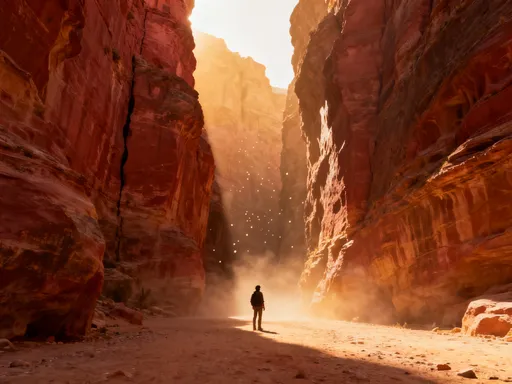
Importantly, self-driving in Oman does not mean traveling without guidance. Many rental agencies offer route suggestions and basic safety briefings, and the Royal Oman Police maintain checkposts along major routes to assist travelers. But the real guide is the landscape itself: the way a wadi narrows to suggest a hidden spring, or how a cluster of stone ruins appears just before a highland plateau. These are the subtle cues that turn a drive into a dialogue with history.
Coral Stone Villages: Architecture That Breathes with the Monsoon
Among the most striking features of Salalah’s architectural heritage are the traditional villages constructed from fossilized coral stone. Found primarily in settlements like Al Fazayah, these homes are built from blocks harvested from ancient reef formations exposed by coastal erosion. The coral, hardened over millennia, is surprisingly durable and provides natural insulation against both heat and humidity—a crucial adaptation in a region where the Khareef season brings near-constant moisture.
The design of these homes reflects centuries of environmental intelligence. Thick coral walls, often more than two feet wide, absorb heat during the day and release it slowly at night, maintaining a stable indoor temperature. Small, high-set windows limit direct sunlight while allowing cross-ventilation, and many homes are oriented to catch the prevailing monsoon breezes. Courtyards, often shaded by date palms or grapevines, serve as communal spaces for family gatherings, food preparation, and respite from the elements.
These architectural choices are not merely functional; they are deeply cultural. The courtyard, in particular, represents a social philosophy centered on privacy, hospitality, and intergenerational living. Rooms typically open inward toward the central space, reinforcing family cohesion and offering protection from the outside world. Even in homes that have been updated with modern amenities, the courtyard remains the heart of domestic life.
Walking through Al Fazayah or similar villages, one notices how the buildings seem to grow from the land rather than sit upon it. Roofs are flat, made of wooden beams covered with layers of reeds, mud, and gravel, allowing for storage or nighttime sleeping during hot months. Doorways are low and narrow, a design that conserves cool air and may also have served a defensive purpose in earlier times. The color palette is earthy—beige, gray, and soft orange—blending seamlessly with the surrounding terrain.
What makes these villages especially remarkable is that they are not museum pieces. Many are still inhabited, with families maintaining traditional lifestyles while incorporating modern necessities. Solar panels sit atop coral walls, and satellite dishes peer over courtyard walls, yet the fundamental layout and materials remain unchanged. This continuity speaks to a deep respect for heritage and a practical understanding of what works in this unique climate.
Fortresses in the Fog: The Legacy of Frankincense Watchtowers
Scattered across the Dhofar highlands are the remnants of an ancient surveillance network—stone watchtowers perched on hilltops, their silhouettes sharp against the mist. These structures, dating back over a thousand years, were once part of a sophisticated system designed to protect the frankincense trade routes. Positioned within sight of one another, they allowed guards to signal danger using smoke or fire, ensuring the safe passage of caravans carrying Oman’s most prized export.
The architectural design of these towers reflects their dual purpose: observation and defense. Typically two to three stories tall, they are built from locally quarried stone, often without mortar, using a dry-stone technique that has withstood centuries of wind and rain. Narrow vertical slits serve as both windows and arrow loops, allowing defenders to see without being seen. Spiral staircases, carved directly into the walls, connect the levels, and the upper floors often feature open platforms for scanning the horizon.
Strategic placement is key. Most towers occupy elevated positions with panoramic views of wadis and trade paths. Some stand alone, while others are part of larger complexes that include storage rooms, living quarters, and small prayer spaces. Their isolation, once an asset, now presents a challenge for preservation. Without regular maintenance, these ruins are vulnerable to erosion, vegetation overgrowth, and unintentional damage from curious visitors.
Despite their state of decay, the towers retain a quiet dignity. Standing inside one on a misty morning, with the sound of wind through the slits and the scent of damp stone, it is easy to imagine the guards who once kept watch here—men attuned to the rhythms of the land and the movement of caravans. These structures are not merely relics; they are records of a time when security, trade, and survival were intertwined.
Efforts to document and preserve these watchtowers have increased in recent years, led by both Omani heritage organizations and international researchers. Surveys using drone imaging and 3D mapping have helped identify previously unknown sites, while community outreach programs educate locals about the historical value of these ruins. Still, much work remains to protect these fragile monuments from further deterioration.
Modern Meets Traditional: How New Buildings Honor Old Designs
In the evolving towns and villages of Dhofar, a quiet architectural dialogue is taking place—one that bridges past and present. Across Salalah and its surrounding settlements, new homes, schools, and government buildings are being constructed with deliberate nods to traditional Omani design. Arched doorways, wind towers for natural cooling, and interior courtyards are no longer confined to heritage sites; they are reappearing in modern contexts, blending aesthetic continuity with contemporary functionality.
This revival is not accidental. The Omani government has implemented urban planning policies that encourage architectural harmony, particularly in historically significant regions. New developments are often required to incorporate traditional elements, ensuring that modernization does not erase cultural identity. In Salalah’s expanding suburbs, for example, villas may feature solar panels and glass windows, but their facades frequently include coral-colored stucco, recessed balconies, and shaded verandas reminiscent of older homes.
Public buildings offer some of the most striking examples of this synthesis. Schools and community centers may use modern materials like concrete and steel, but their layouts often mirror the inward-focused design of traditional courtyard houses. This not only honors heritage but also improves energy efficiency—courtyards create microclimates that reduce the need for air conditioning, a significant benefit in a hot climate.
The result is a built environment that feels both current and rooted. Unlike places where modernization has led to generic, international-style architecture, Salalah’s new constructions speak a local language. They acknowledge the wisdom of ancestral design while embracing the needs of today’s families—larger living spaces, private bathrooms, reliable electricity, and internet access.
This architectural continuity also fosters a sense of pride among residents. For younger generations, seeing traditional forms reflected in new buildings reinforces a connection to their heritage. For visitors, it offers a more authentic experience—one where culture is not frozen in time but actively evolving.
Hidden Wadis and Forgotten Settlements: GPS Off, Adventure On
Some of the most memorable discoveries in Salalah happen when the GPS signal fades. Deep within the mountain folds, beyond the reach of tourist maps, lie wadis and villages that few outsiders ever see. Wadi Ain, for instance, is a narrow, green canyon where freshwater springs feed terraced gardens and ancient aflaj—Oman’s traditional irrigation channels—still carry water to date palms and banana trees. The path to reach it is rough, often requiring a high-clearance vehicle, but the reward is a landscape that feels suspended in time.
Here, stone homes cling to steep slopes, their walls built from fieldstone and mud. Some are occupied year-round by farming families; others are seasonal, used during the Khareef months when the water flows freely. Encounters with locals are often wordless but warm—a nod from an elder tending a garden, a child waving from a terrace, a shared cup of sweet Omani tea offered without expectation.
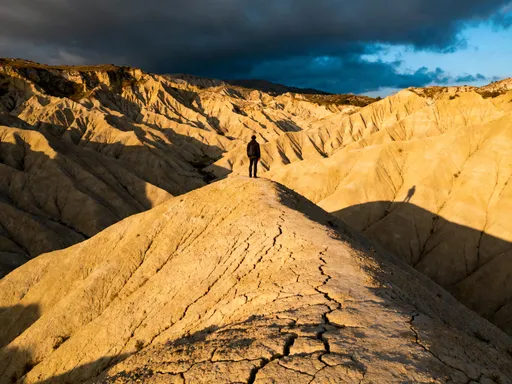
Further afield, near the Shuwaymiyah desert arc, abandoned villages emerge from the haze like mirages. These settlements, once sustained by seasonal rains and underground aquifers, were gradually deserted as younger generations moved to cities. Yet their structures remain, slowly returning to the earth. Walking among them, one finds doorframes still standing, staircases leading to nowhere, and walls etched with the marks of wind and time.
Exploring these places requires not just a capable vehicle but also a respectful mindset. Many of these sites are on private or communal land, and some structures may still be used by herders or farmers. Ethical travel practices—such as avoiding graffiti, not removing artifacts, and asking permission before photographing people—are essential. The goal is not to conquer the unknown but to witness it with humility.
For those willing to navigate the rough terrain and embrace the uncertainty, these hidden corners offer a rare kind of connection—one that transcends sightseeing and touches something deeper. It is in these quiet moments, standing in a ruined courtyard with the wind in the palms, that the true spirit of Salalah reveals itself.
From Ruins to Revival: Preserving Salalah’s Architectural Identity
The architecture of Salalah is more than a collection of old buildings; it is a living record of adaptation, resilience, and cultural continuity. From coral villages to frankincense towers, each structure tells a story of how people have shaped their environment and been shaped by it in return. But these stories are fragile, threatened by time, weather, and the pressures of modern development.
Preservation efforts in Dhofar are growing, driven by a combination of government initiatives, academic research, and grassroots community action. Heritage surveys have documented hundreds of traditional buildings and archaeological sites, providing a foundation for conservation planning. In some villages, local cooperatives have begun restoring old homes for use as guesthouses or cultural centers, creating sustainable income while safeguarding architectural heritage.
Tourism, when managed responsibly, can play a vital role in these efforts. Visitor fees, guided tours, and cultural workshops generate funds that support maintenance and restoration. More importantly, they raise awareness—both locally and internationally—about the value of these sites. When travelers appreciate the ingenuity of coral construction or the strategic brilliance of a watchtower, they become advocates for preservation.
Yet there is a delicate balance to maintain. Over-commercialization risks turning living communities into theme parks, stripping them of authenticity. The goal is not to freeze Salalah in the past but to support its evolution in a way that honors its roots. This means investing in skilled craftsmanship, training young Omanis in traditional building techniques, and ensuring that new developments complement rather than overshadow the old.
Ultimately, the preservation of Salalah’s architectural identity is not just about saving stones and mortar. It is about sustaining a way of life—a deep connection to place, climate, and history. Every restored wall, every maintained aflaj, every child who learns the name of a forgotten tower is a step toward continuity.
This journey through Salalah wasn’t just about miles driven or sites seen—it was about connection. Each uniquely built home, tower, and village revealed a deep dialogue between people and environment. By choosing to drive beyond the obvious, travelers don’t just witness history—they become part of its continuation.