You Gotta See Lucerne’s Cityscape at Golden Hour—It’s Unreal
Lucerne isn’t just a pretty face—it’s a living canvas where mountains kiss the sky and light dances on water. I went chasing cityscape shots one spring morning, not expecting to be stopped in my tracks by how the city *feels* through a lens. From misty lakeside views to rooftops glowing in golden hour, Lucerne delivers moments that transcend postcards. If you're into photography, this place doesn’t just invite your camera—it demands it.
Why Lucerne Stands Out for Urban Photography
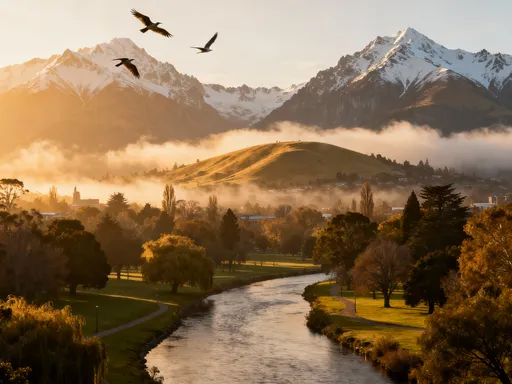
Lucerne occupies a rare space in the world of urban photography—not quite mountain village, not quite city, but a harmonious blend of both. What sets it apart from other European destinations is its seamless integration of natural grandeur and historic charm. The city rests on the northern shores of Lake Lucerne, framed by the snow-dusted peaks of Mount Pilatus, Rigi, and Stanserhorn. These alpine sentinels don’t merely appear in the background; they become active participants in every photograph, lending scale, depth, and drama.
Equally compelling is Lucerne’s architectural legacy. Its old town is a tapestry of medieval timber-framed houses, centuries-old stone bridges, and Baroque church spires. The Chapel Bridge, with its red-tiled roof and 17th-century painted interiors, is perhaps the most iconic structure, but it’s not alone in commanding attention. Every alleyway, every gabled rooftop, and every cobblestone path contributes to a visual rhythm that feels both timeless and intimate.
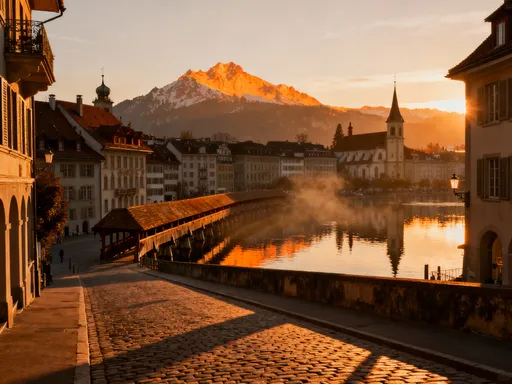
What makes Lucerne especially valuable for photographers is the interplay between these elements—architecture, water, and mountain light. The surface of Lake Lucerne acts as a natural mirror, doubling the city’s silhouette and amplifying golden hour glows. Reflections stretch across the water like liquid gold, offering symmetrical compositions that are both striking and serene. This balance of natural and built environments is uncommon in urban photography, where cities often overpower their surroundings. In Lucerne, nature and city coexist in quiet dialogue, creating images that are layered, emotional, and rich with storytelling potential.
Best Spots for Iconic Cityscape Shots
To capture Lucerne at its most photogenic, timing and location must align. Several vantage points offer consistently breathtaking views, each with its own character and compositional advantages. The first and most accessible is the western end of the Chapel Bridge, near the octagonal Water Tower. This spot provides a head-on view of the bridge’s full length, framed by the lake and mountains behind. At sunrise, the early light strikes the bridge’s wooden planks and red roof, creating warm tonal contrasts. Photographers can use a wide-angle lens to include both the bridge and its reflection, or zoom in to isolate architectural details like carved eaves or weathered support beams.
Another prime location is the lakeshore promenade stretching from the Lucerne Culture and Congress Centre toward the Glacier Garden. This walkway offers unobstructed east-facing views across the water, ideal for capturing golden hour when the setting sun bathes the city’s stone facades in amber light. The flat, open space allows for low-angle shots that emphasize reflections, particularly on calm evenings when the lake becomes a perfect mirror. Tripods are common here, and locals rarely mind photographers as long as they remain respectful of public space.
For a higher perspective, the Musegg Wall delivers unmatched panoramic views. This 14th-century fortification has several accessible towers, with the tallest—Museum Tower—offering a 360-degree vista. From this elevation, photographers can frame the entire city nestled between lake and peaks, with red-tiled roofs cascading down to the shoreline. The vantage point is excellent for wide compositions, especially during blue hour when city lights begin to twinkle against the darkening sky. Because the wall sees fewer crowds than the city center, it’s easier to set up without distraction, though access ends at dusk, so planning is essential.
Lastly, the boat docks near the train station provide dynamic waterfront angles. Shooting from a departing or arriving ferry allows for motion-blur effects on the water while keeping the city skyline sharp. This technique works especially well at twilight, when artificial lighting along the promenade begins to glow. These locations, when visited in sequence, offer a comprehensive visual narrative of Lucerne—one that moves from intimate details to sweeping grandeur.
Mastering Light: Sunrise, Golden Hour, and Blue Hour
Light is the soul of photography, and in Lucerne, it transforms the cityscape in distinct phases throughout the day. Sunrise, though less crowded, offers a quiet, ethereal quality. The first rays climb over Mount Rigi to the east, casting soft, diffused light across the lake. During this time, the city appears wrapped in a pale gold veil, with mist often hovering just above the water. This is ideal for capturing moody, atmospheric shots with gentle contrast. A lower ISO setting (100–200) and a slightly longer shutter speed help preserve the delicate tones without overexposing highlights.
Golden hour—the period shortly after sunrise and before sunset—delivers the most dramatic transformations. As the sun lowers in the sky, its light becomes warmer and more directional, accentuating textures in stone and wood. Facades along the Reuss River glow in rich amber, while shadows stretch across cobblestones, adding depth. This is the perfect time to photograph the Chapel Bridge, where the interplay of light and shadow highlights its intricate truss structure. A polarizing filter can help manage reflections on wet surfaces, while a mid-range aperture (f/8 to f/11) ensures both foreground and background remain in focus.
Blue hour follows sunset, when the sky shifts from orange to deep indigo and the city’s artificial lighting takes center stage. Streetlamps, building facades, and boat navigation lights begin to illuminate, creating a balance between natural and man-made glow. The contrast between the cool sky and warm city lights produces a cinematic effect. For best results, use a tripod and manual settings: ISO 100, aperture f/5.6 to f/8, and shutter speeds between 10 and 30 seconds. White balance should be set to “daylight” or “cloudy” to retain warmth in the city lights while preserving the blue tones in the sky.
Understanding these light cycles allows photographers to plan their shoots with precision. Each phase offers a different emotional tone—serenity at dawn, vibrancy at golden hour, and elegance at twilight. By returning to the same location across multiple times of day, one can create a compelling visual series that tells the story of Lucerne’s changing moods.
Gear That Makes a Difference
While Lucerne’s beauty is undeniable, having the right gear enhances the ability to capture it faithfully. A sturdy tripod is essential, especially for long exposures during blue hour or when shooting reflections on still water. Compact, travel-friendly models with adjustable legs work well on uneven ground near the lake or on stone steps of the Musegg Wall. Even smartphone photographers benefit from mini tripods or clamp stands that attach to railings.
A polarizing filter is another valuable tool. It reduces glare from the lake’s surface, allowing for clearer reflections and richer color saturation in the sky and architecture. This is particularly useful on sunny afternoons when water glare can wash out details. Neutral density (ND) filters are also helpful for daytime long exposures, such as blurring boat wakes to create smooth, glass-like water effects.
For lenses, a versatile zoom—such as a 24-70mm for full-frame cameras or 18-55mm for crop sensors—covers most scenarios, from wide cityscapes to tighter architectural shots. A wide-angle lens (16-35mm) excels at capturing expansive views from the lakeshore or towers, while a telephoto lens (70-200mm) allows for compressed perspectives, such as isolating a church spire against the mountain backdrop.
Smartphone photography has also reached impressive levels. Modern phones with pro-mode settings allow manual control over ISO, shutter speed, and focus. Using apps like Halide or ProCamera enables RAW shooting, which provides greater flexibility in post-processing. A portable lens attachment—like a clip-on wide-angle or macro—can add creative options. Regardless of device, a small stabilizer or handheld gimbal helps reduce shake during video or low-light shots.
The key is not to overpack. Lucerne is best explored on foot, and carrying minimal, functional gear ensures mobility and comfort. Focus on tools that solve specific challenges—reflection control, stability, and versatility—rather than accumulating equipment.
How Weather Shapes the Mood
Weather in the Swiss Alps is unpredictable, but rather than viewing rain, fog, or snow as obstacles, photographers can treat them as creative collaborators. Overcast skies, often dismissed, actually provide soft, even lighting that minimizes harsh shadows—ideal for capturing the subtle textures of historic buildings. On misty mornings, the city appears half-veiled, with church spires emerging like ghosts from the haze. These conditions lend a dreamlike quality to images, evoking a sense of timelessness.
Rain transforms Lucerne into a reflective wonderland. Wet cobblestones become natural mirrors, doubling street lamps, window lights, and architectural details. Shooting at night after a rainfall multiplies the visual impact of golden city lights. To protect gear, a simple rain cover or plastic bag with a lens hole works well. Waterproof boots and a lightweight poncho keep the photographer dry without sacrificing mobility.
Snowfall, though less frequent in the city center, adds a magical layer when it does arrive. A dusting on rooftops and tree branches creates a storybook aesthetic. Snow-covered Chapel Bridge, lit by soft winter light, is a favorite among visitors. However, cold temperatures affect battery life, so carrying spares in an inner pocket is advisable. Additionally, avoiding rapid temperature changes—like moving from cold outdoors to warm indoors—prevents lens fogging.
Fog, in particular, offers unique compositional opportunities. It naturally frames subjects by obscuring distant elements, drawing focus to foreground details like lanterns, bridges, or lone figures on the promenade. Using a tripod ensures sharpness in low-contrast conditions, while slightly increasing contrast in-camera or during editing helps restore depth. The mood created by these weather conditions often resonates more deeply than perfectly clear skies, reminding viewers that beauty thrives in imperfection.
Navigating the City Like a Visual Explorer
Photographing Lucerne is as much about movement as it is about stillness. A well-planned walking route maximizes visual variety while minimizing fatigue. Begin early—ideally 30 minutes before sunrise—at the eastern end of the lake near the Verkehrshaus (Transport Museum). This quiet area offers unobstructed views westward, perfect for capturing the first light on the city skyline.
From there, walk west along the promenade toward the Chapel Bridge. This stretch reveals evolving perspectives: first the distant silhouette of buildings, then closer views of boats and waterfront cafes. By the time you reach the bridge, the sun is higher, illuminating its red roof and wooden beams. Spend time here experimenting with angles—shoot from the water level, from the bridge itself, or across the river for reflection shots.
Next, enter the old town and wander through cobblestone alleys like Hirschenplatz and Weggisgasse. These narrow streets offer intimate architectural details—carved signs, flower boxes, wrought-iron lamps—ideal for close-up photography. Avoid midday crowds by visiting shops and cafes briefly, using them as resting points rather than distractions.
In the late afternoon, head to the Musegg Wall. Enter near the Jesuit Church and climb to the Museum Tower. The ascent is gentle, and the path is well-marked. Arrive at least an hour before sunset to secure a good position. After golden hour, descend and walk back toward the lake, joining the evening crowd on the promenade. This final leg offers opportunities for candid street scenes and twilight cityscapes.
Comfort is key. Wear supportive shoes, carry water, and dress in layers—Alpine weather shifts quickly. A small backpack holds gear, snacks, and a light jacket. Respect local etiquette: avoid blocking sidewalks, don’t touch historic structures, and be mindful when photographing people. Lucerne’s charm lies in its tranquility; preserving that atmosphere benefits everyone.
Bringing the Story Home: Editing and Sharing Your Vision
Capturing Lucerne is only the first step; refining and sharing those images completes the journey. Post-processing should enhance, not distort, the scene. Software like Adobe Lightroom or Capture One allows for precise adjustments in exposure, contrast, and color balance. Slightly increasing clarity can bring out architectural textures, while careful sky enhancement preserves natural tones without appearing oversaturated.
Cropping is a powerful tool for composition. Tightening a frame can eliminate distractions and emphasize symmetry—especially useful for reflection shots. However, over-editing risks losing authenticity. The goal is to reflect what the eye felt, not to fabricate a fantasy. Preserving shadow detail and avoiding blown-out highlights maintains the emotional truth of the moment.
For smartphone photographers, apps like Snapseed or Adobe Lightroom Mobile offer similar capabilities. RAW files, if available, provide more editing latitude. Even minor tweaks—adjusting warmth or sharpening edges—can elevate a good photo to a great one.
Sharing the experience extends its impact. High-quality prints displayed at home serve as lasting reminders of the journey. Digital photo books or online galleries allow friends and family to step into the moment. Platforms like Instagram or personal blogs can be used thoughtfully, focusing on storytelling captions that describe the light, the silence, the chill in the air—elements a photo alone cannot convey.
Beyond aesthetics, these images become personal records of presence and perception. They remind us that travel is not just about seeing places, but about seeing them deeply. In editing and sharing, the photographer shifts from observer to storyteller, passing on not just a view, but a feeling.
Lucerne teaches you to see beauty in layers—stone, light, water, time. It’s more than a destination; it’s a masterclass in seeing. When you return home, your photos won’t just show a place—they’ll carry the quiet magic of a city that reveals itself, frame by frame.